
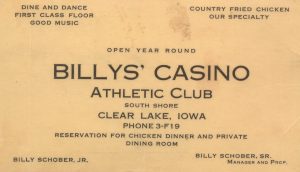
During 1929-1930 numerous clubs opened along the South Shore for dining and dancing including Billy Schober’s Casino, Shady Beach, Chick-E-Dee, Whit’s Nite Spot and Charlie Ritz’s Club.
An association of Clear Lake businessmen purchased the old Idelo on the lake shore and remodeled it as a new convention center. School basketball games, soft ball tournaments, basketball games by independent teams, in addition to various conventions and farm meetings will be held in the building.
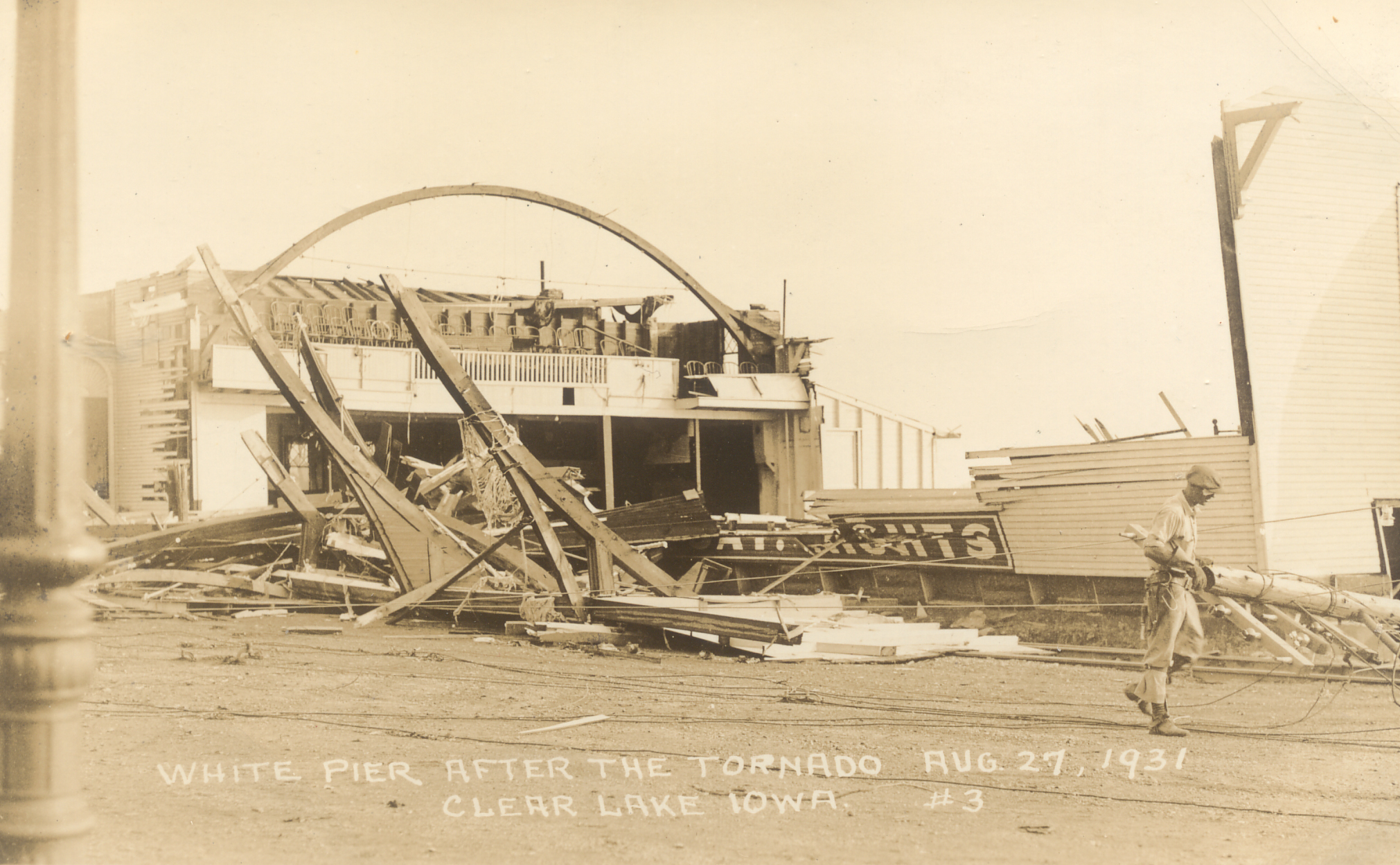
Tornado strikes on Aug. 27, 1931: Hail, rain and windstorm destroys the White Pier at the foot of Main Street, sending part of the roof into the side of the Park Theater building. The roller coaster at Bayside was demolished and the storm overturned the Princess excursion boat and killed Miss Bessie Rust of Algona.
An underground pedestrian passage is being built under the busy Highway 106, the road that divides the Clear Lake State Park.
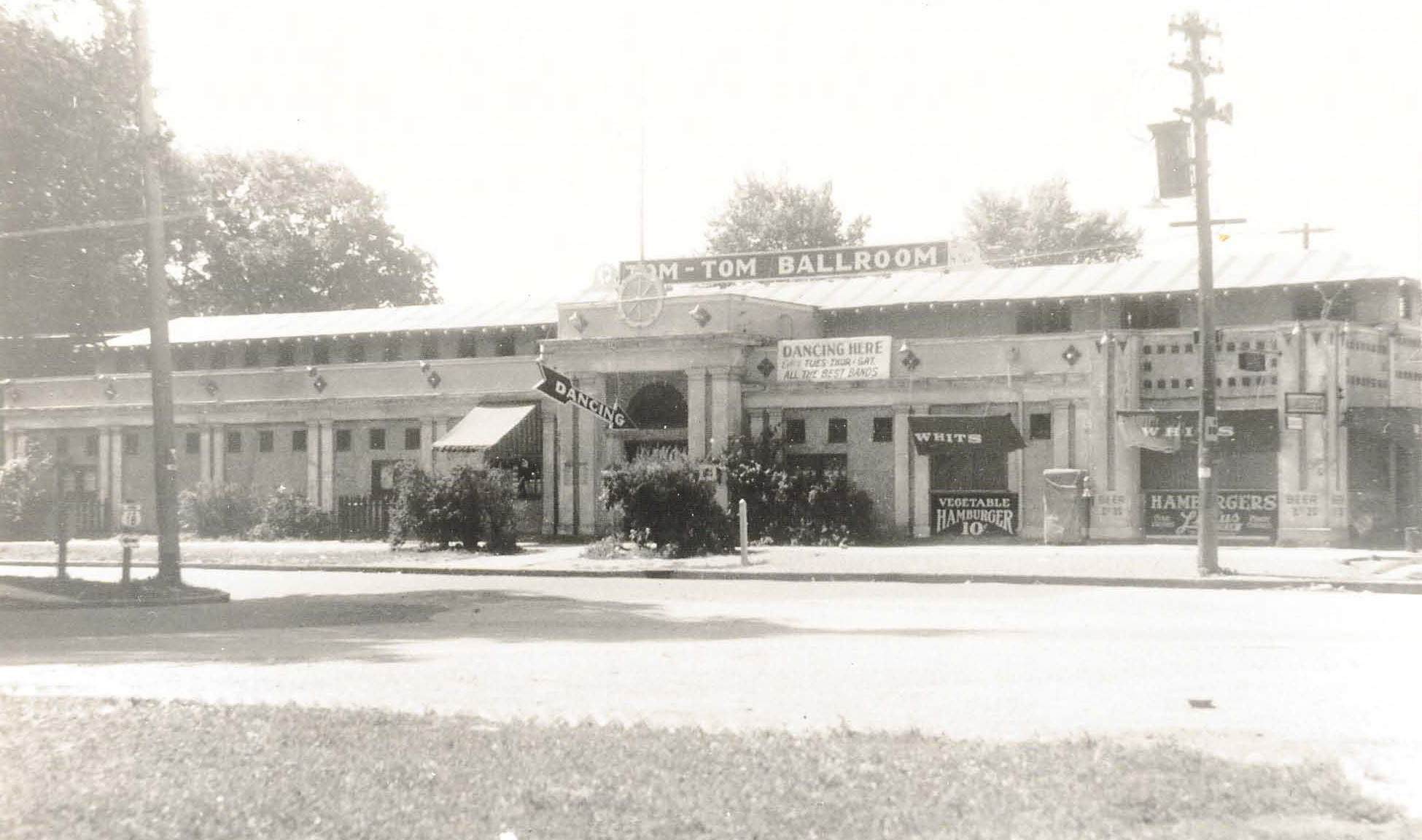
Tom Gates of St. Paul, who has leased the Petersen Bathhouse for ten years, converted the building to a new dance hall named the Tom Tom. A few months later the ballroom and adjoining cottage burned down
The first North Iowa Band Festival was organized in Clear Lake by John Kopecky, the Clear Lake Music Mothers and the Clear Lake Commercial Club. An estimated 12,000 to 15,000 people attended. A nationally noted composer conducted a massed band concert of over 350 musicians.
Eighty to 90 carloads of potatoes and 34 cars of onions were being shipped this year by Sam Kennedy and his Red Globe Farms to markets in Chicago, St. Louis, Kansas City and Des Moines.
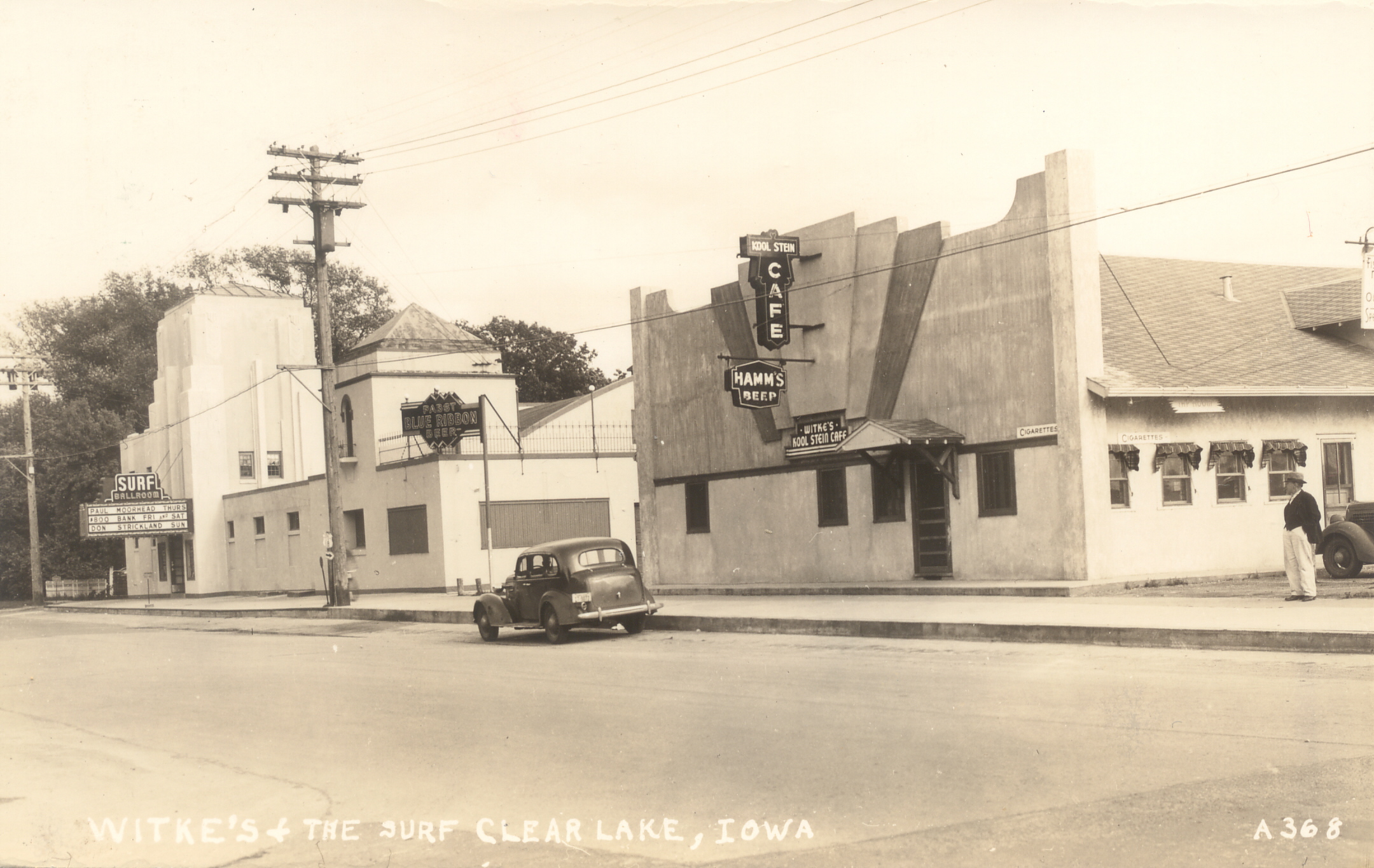
Witkes Kool Stein Cafe, later known as Witke’s Restaurant, opens on the Lake.
Clear Lake was the third city in Iowa to enjoy the advantages of natural gas rather than coal gas.
The new Surf Ballroom on the north shore held its opening dance with about 700 couples present. Wally Erickson’s Marigold orchestra of Minneapolis furnished the music. The new Surf was constructed on the site of the Tom Tom ballroom.
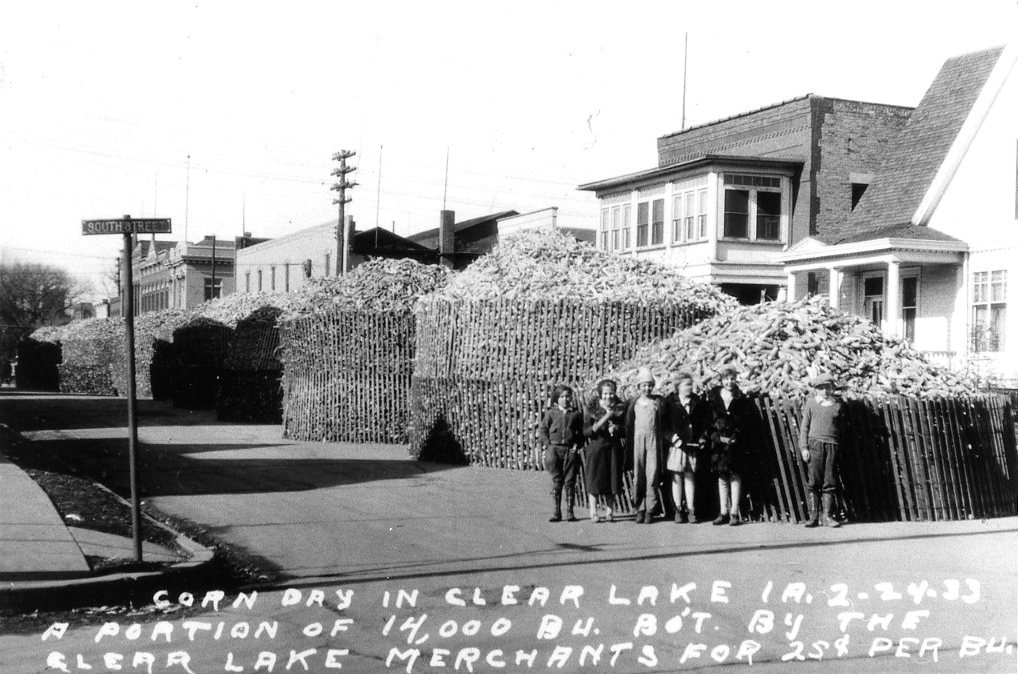
The depression has collapsed corn prices. February 24th has been designated as Corn Day for Clear Lake, and Clear Lake leads the nation in pioneering a movement to restore farm prices. The Clear Lake Commercial Club established the first Corn Exchange Bank in the United States, which paid farmers nearly three times the market price for their corn. Approximately 12,200 bushels of corn were purchased, and $3,000 of First Iowa Corn Money was issued to farmers. Downtown streets were filled with cribbed corn, and Clear Lake received nationwide publicity for this effort to boost the local farm economy.
After the bank holiday of 1933, both Clear Lake banks closed. E.B Stillman led the effort to re-charter the First National Bank of Clear Lake which became the Clear Lake Bank and Trust.
John Dillinger and his gang robs the First National Bank in Mason City and hides out from authorities in the West end of Clear Lake.
The Clear Lake Yacht Club was organized and racing several classes of sailing scows.
Charles Knutson purchased the Cerro Gordo Bank building at auction and leases space for commercial businesses.
The Clear Lake Lions Club transfers the ownership of “Lions Field” to the School District after paying off the 1923 purchase loan
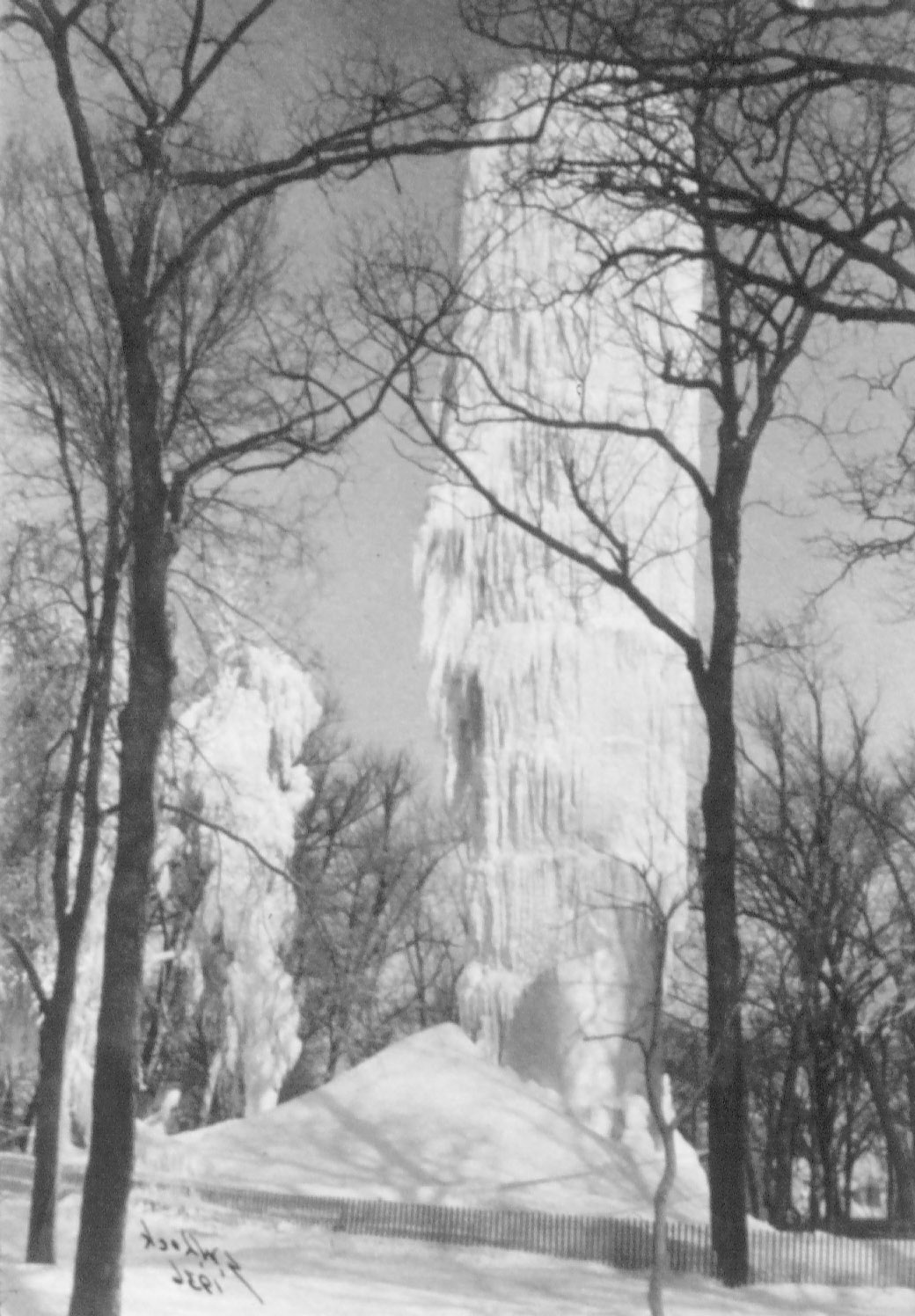
A tower of ice stands in the City Park. Freezing temperatures and overflow from the Standpipe water storage facility, in the middle of City Park, formed a huge solid icicle, 80 feet in the air.
Interurban electric passenger railroad service discontinued. Freight service continued to 1964.
After an attempt to rebuild the White Pier fails, a new concrete split boulder seawall is constructed as a Works Progress Administration, WPA, project at the foot of Main Street.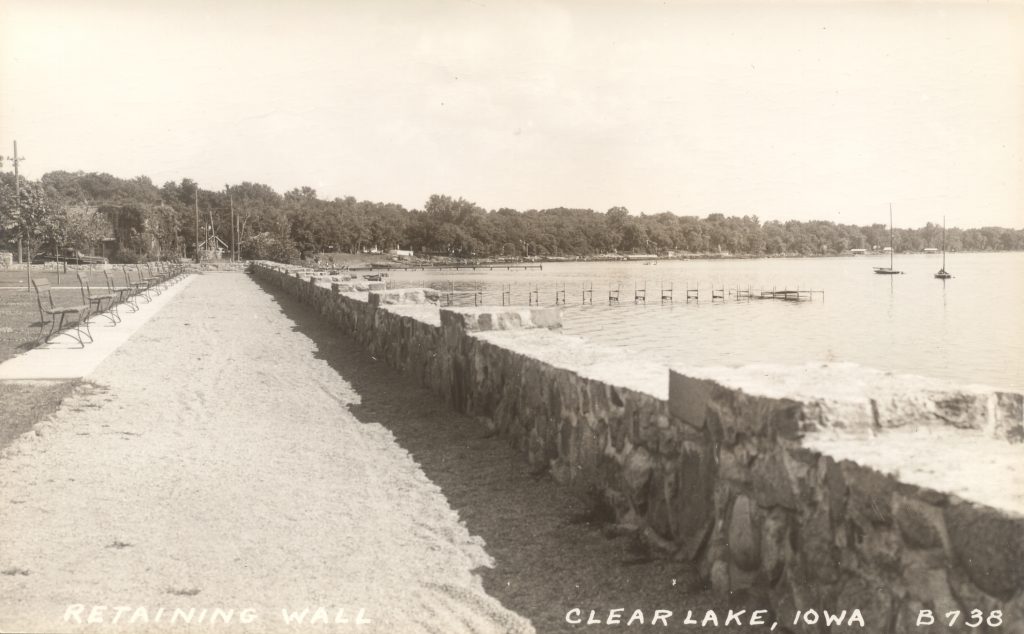
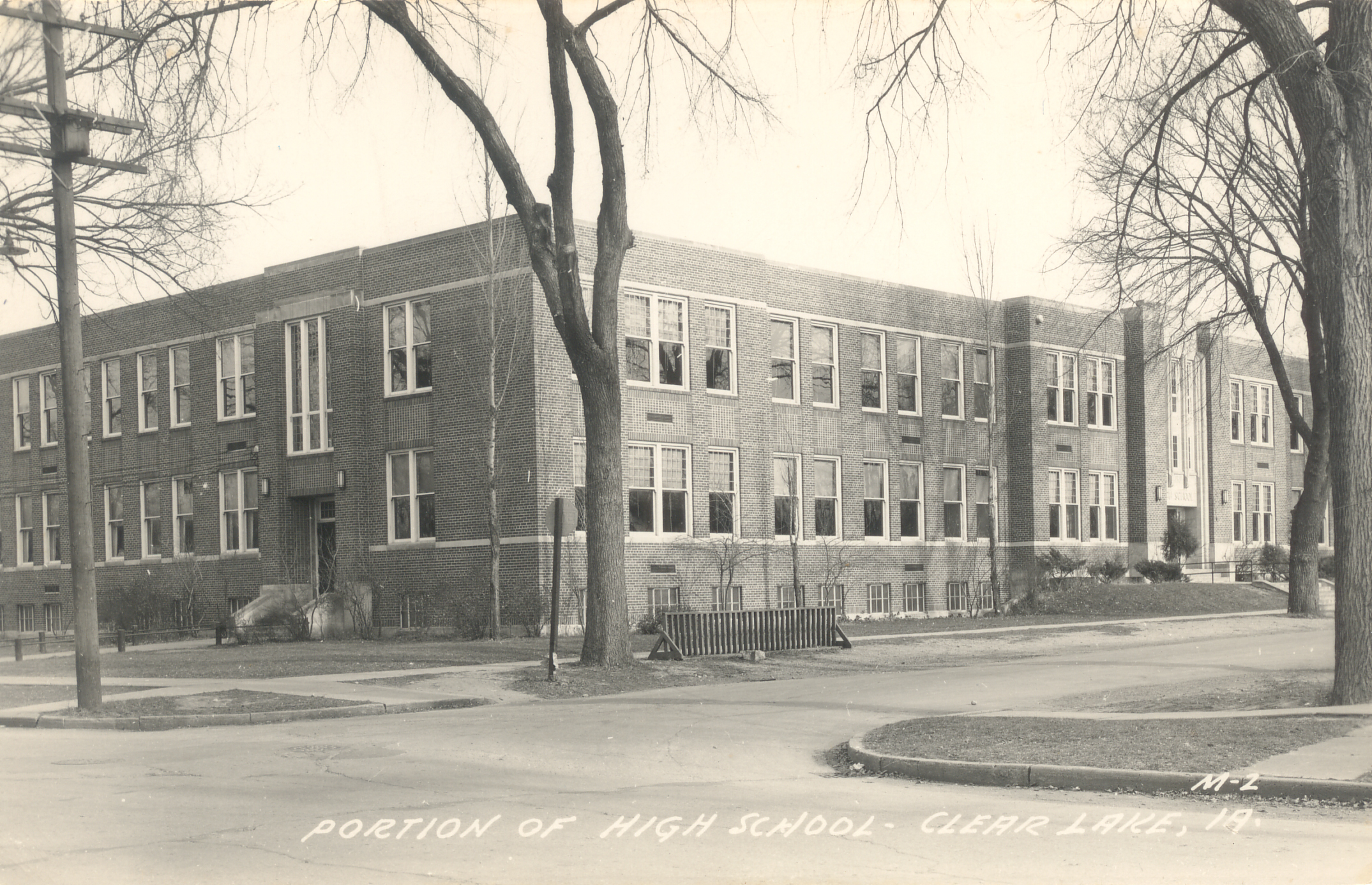
Construction of Clear Lake’s new High School on Benton Street, just South of Central School, was completed by Andersen Construction Company and the students have moved into their classrooms.
The Governor’s Days tradition begins. The Clear Lake Conservation League, the predecessor of the Association for the Preservation of Clear Lake, organized and elected officers.
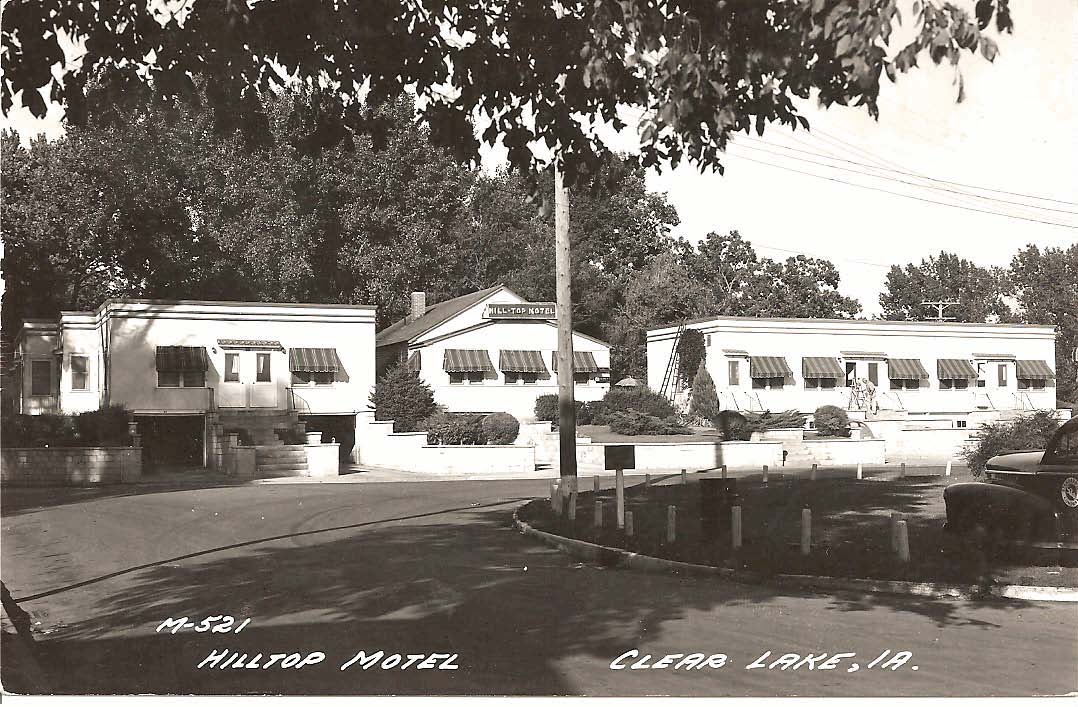
Mr & Mrs Edwin Valley opened the Hill Top Hotel on the site of the Oaks Hotel near the Surf Ballroom.
The Clear Lake population increases by 22%. New census reveals an advance from 3,066 in 1930 to 3,764 now.
Ben Franklin Variety Store and Federated Stores open in the rebuilt Sondrol building. In 1945, the US Post Office moves into a space on South Fourth Street in the building.
Ed “Red” Callanan purchases the Jefferson Smoke Shop and Billiards hall remaining as Callanan’s.
The Clear Lake Bakery expands delivering it’s Butter Top breads and baked goods to area stores.
Grant Wood takes up summer residence in the “No Care No More” cottage on the North Shore and converted an old railroad station into a studio. “Spring in Town” and “Spring in the Country”, and the lithograph, “December Afternoon” were completed by Wood while in Clear Lake this Summer.
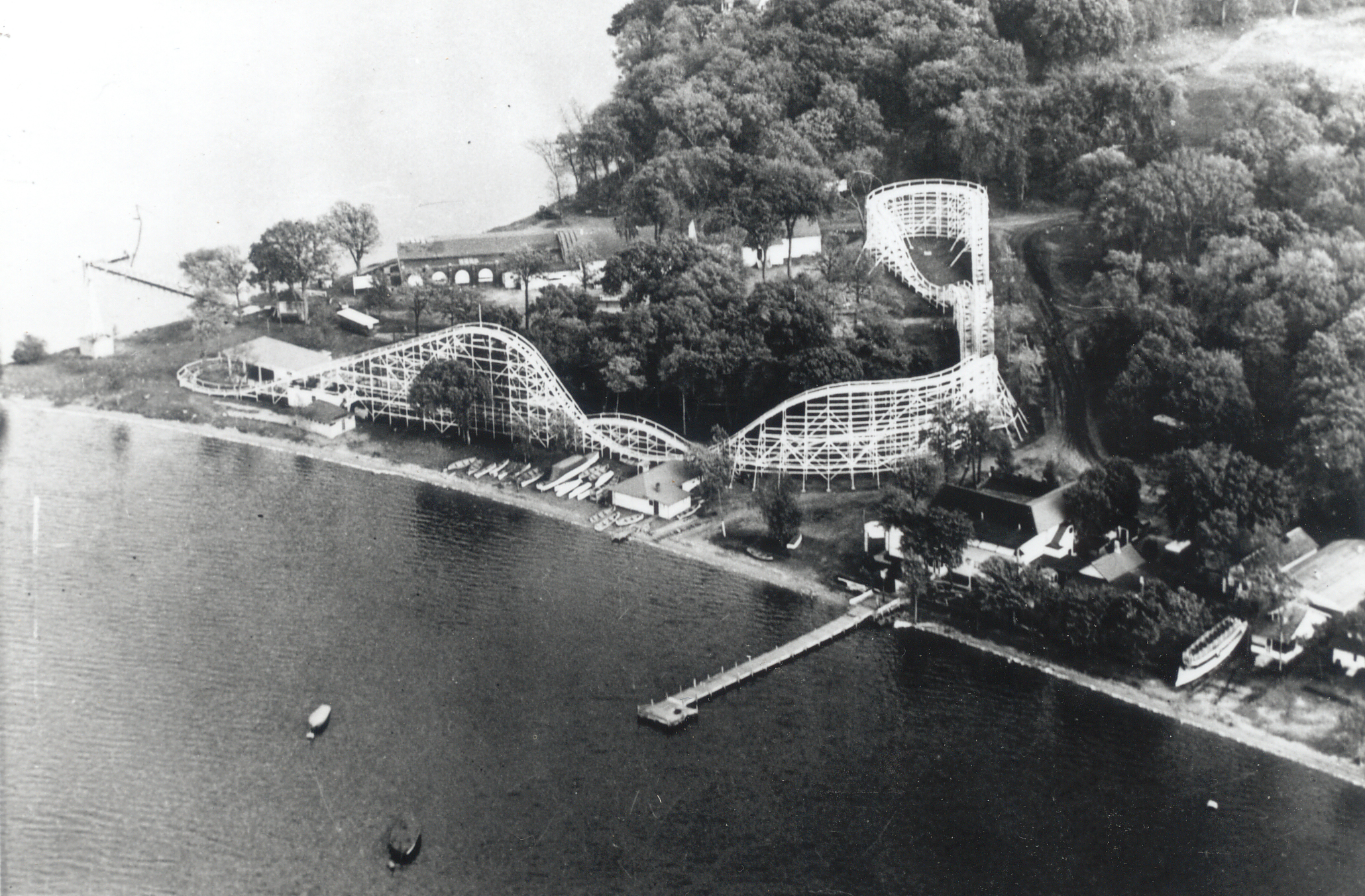
A new, larger Roller Coaster replaced the huricane damaged one at Bayside Park.
To aid the War effort, two area construction firms, Sears Co. and Duesenberg Co., helped the U.S. Army build the Alaska Highway.
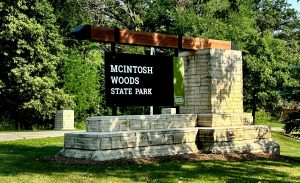
Rose McIntosh donates 60 acres on the north shore for as a public park.
The war is over.
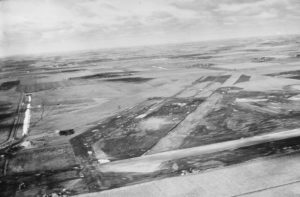
The Airport opens just east of town, reducing travel times.
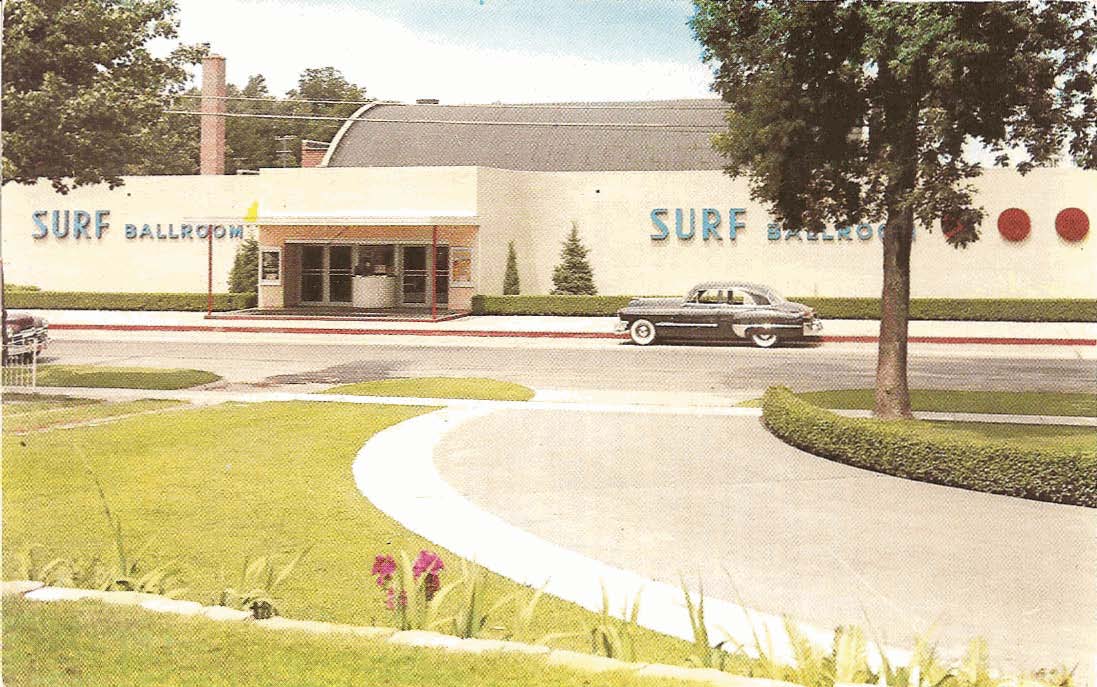
The Surf Ballroom burns down. It was rebuilt a year later, across the street, at a cost of $350,000, by the owner, Carl Fox. During the late 40’s and 50s, many celebrities and bands played the ballroom, including Guy Lombardo, Lawrence Welk, Duke Ellington, Glenn Miller, Jimmy and Tommy Dorsey.
The Mason City Kiwanis Club purchased 9 ½ acres on the south shore as a camp for Girl Scouts. The camp lodge was built on a hill overlooking the area. The camp was originally known as Camp Gaywood until 1995, when the name was changed to Camp Tanglefoot