
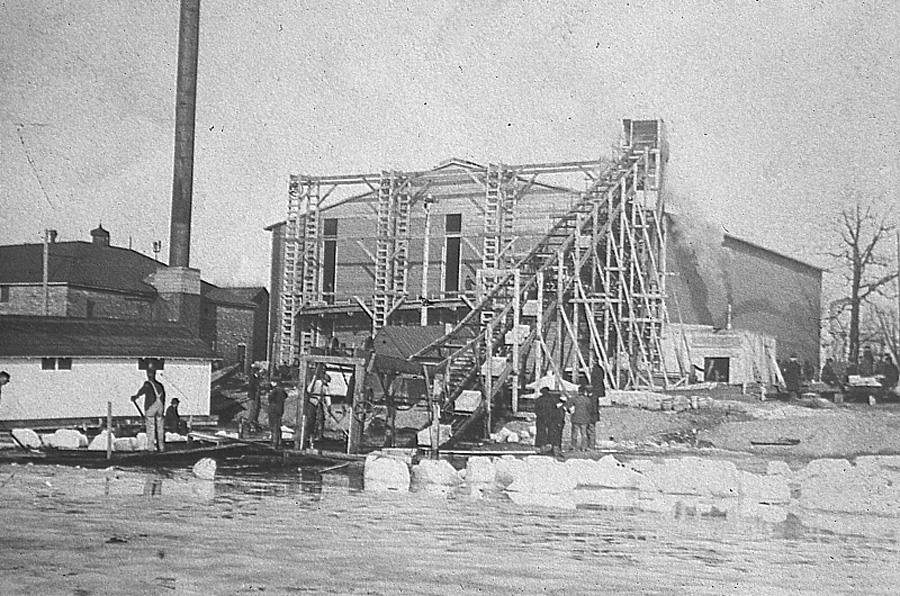
The first harvest of ice was cut by hand when it reached 12 inches thick. The ice blocks were floated to a ramp, tied with ropes, and pulled into an ice storage house next to the power plant just south of Main Street. The ice was delivered to local homes and businesses by cart.
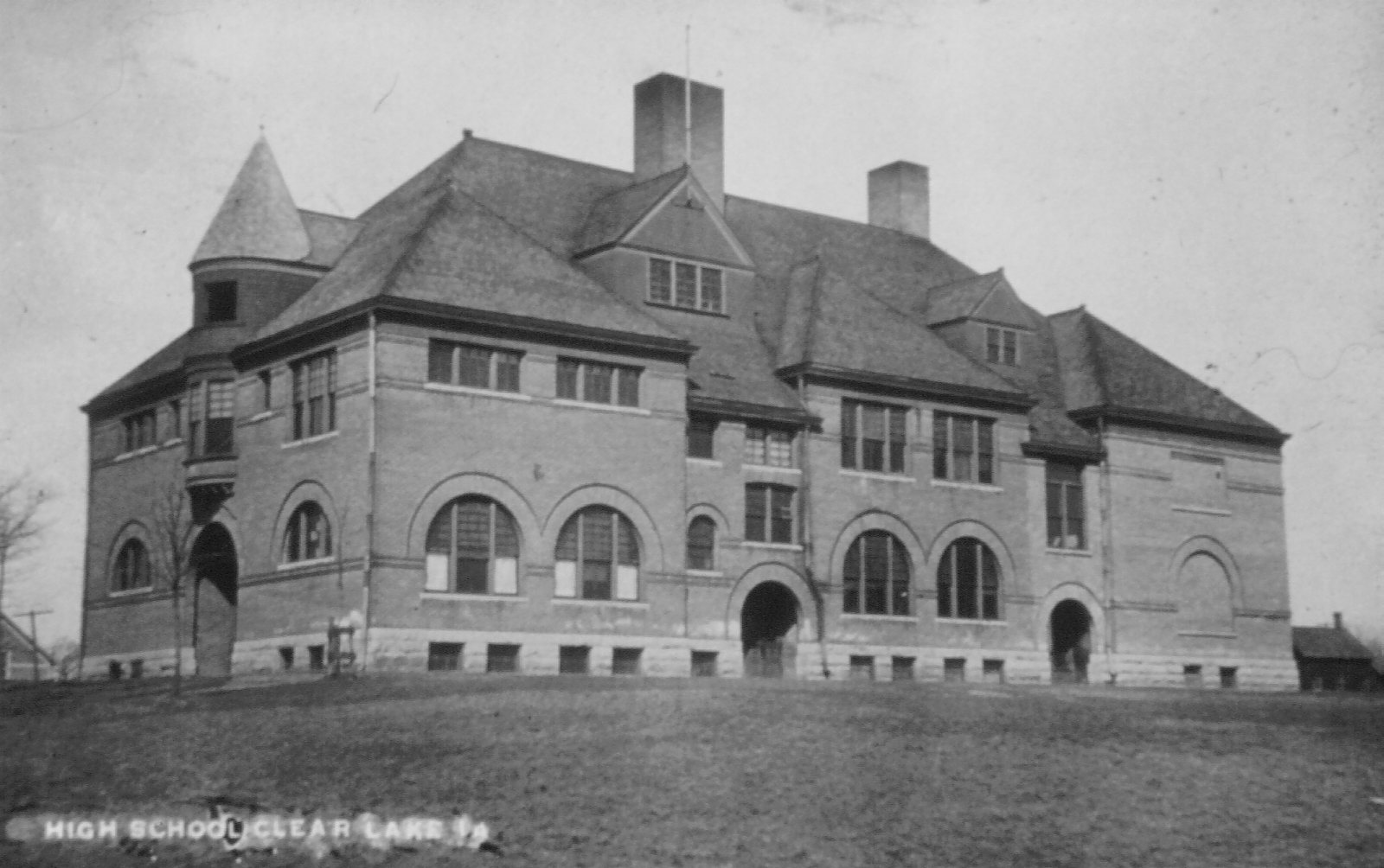
By 1900, the town had outgrown the 1870s schoolhouse, and a new grand school building was constructed at East and Division streets (North 8th Street & 7th Ave N)
Sam Kennedy and his family arrived in Clear Lake and established a farming operation growing vegetables in low-lying areas with rich peat soil.
Father Nagle organized the purchase and renovation of the old Congregation Church building on East Street (South 8th Street) for the Catholic Church
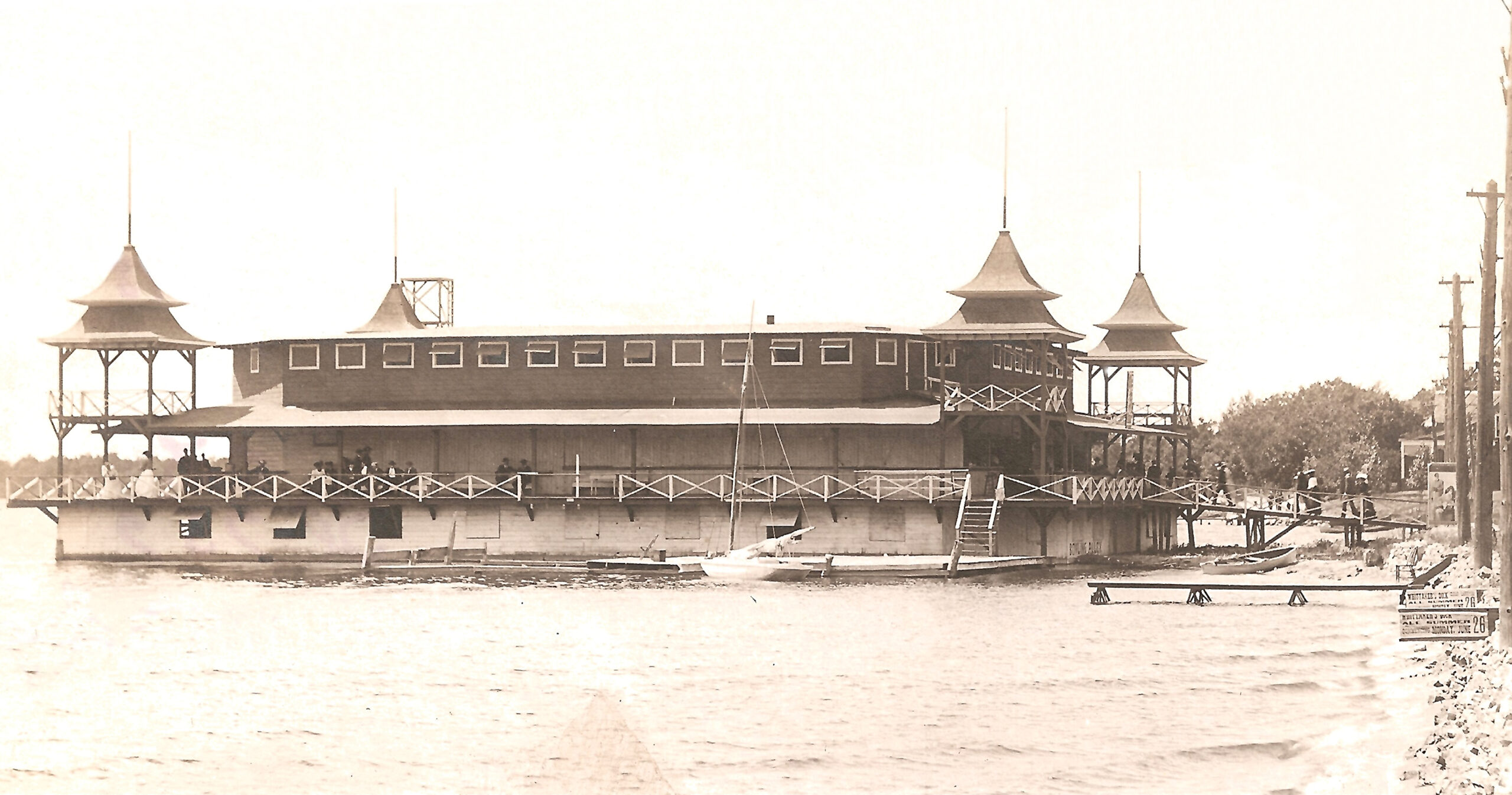
Isaac Whitaker’s Covered Pier and Pavilion opens in front of the Lake Shore Hotel. The two story structure has promenade decks surrounding the dance hall and theater on the upper level with a bowing alley and concession stands on the lower level. It was demolished five years later after the lower floor flooded as the lake level rose.
The new two story City Hall building opened housing the City offices, Fire Department, Public Library and public meeting rooms.
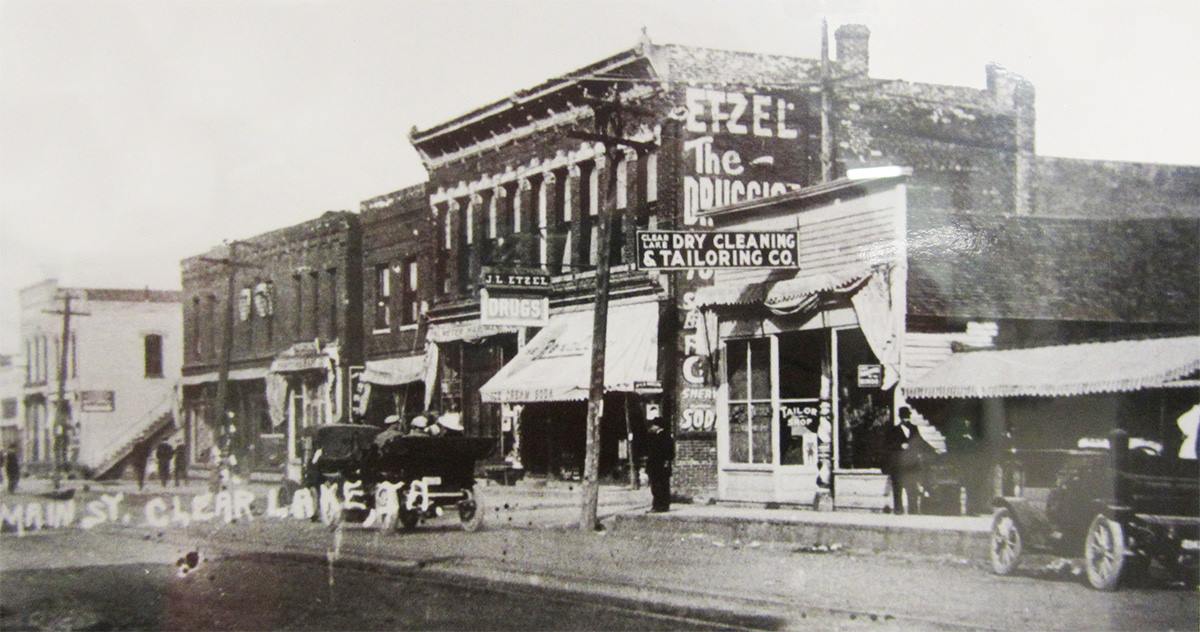
John Etzel erected a two story building at 313 Main for his drug business and provided offices on the second floor for medical doctors.
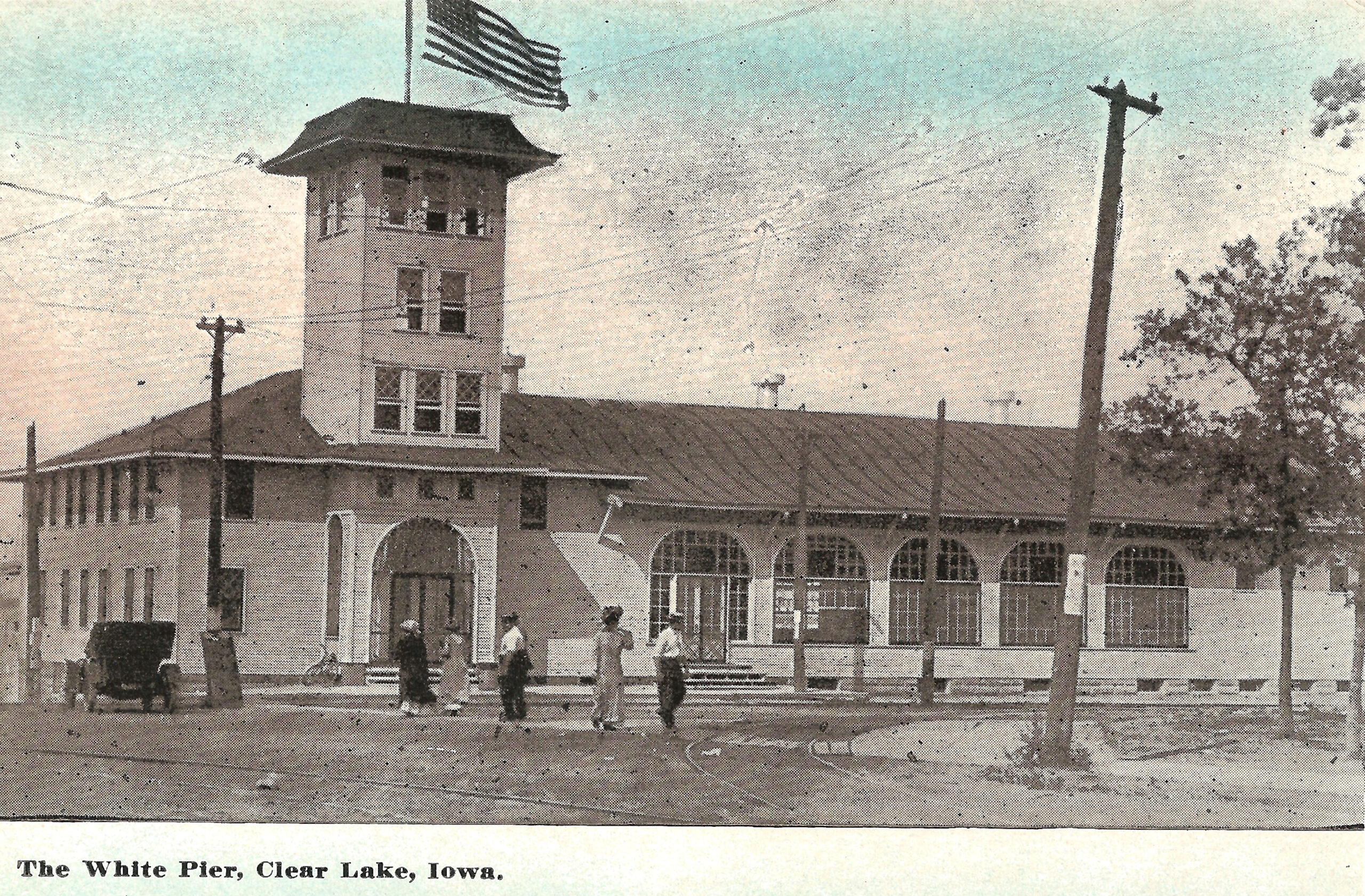
The White Pier is constructed at the end of Main Street.The dance hall had a balcony where mothers could proudly keep an eye on their daughters and see how well they danced, or perhaps how one looked in her new organdy dress.
On the south shore, J.M Younglove developed Bayside Park which included a dance hall, cabins and restaurants. Hourly excursion boats, like the Princess, brought guests from the downtown Black Diamond Fleet and the White Line.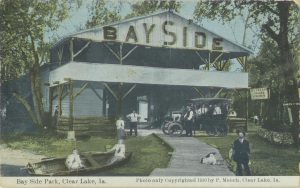
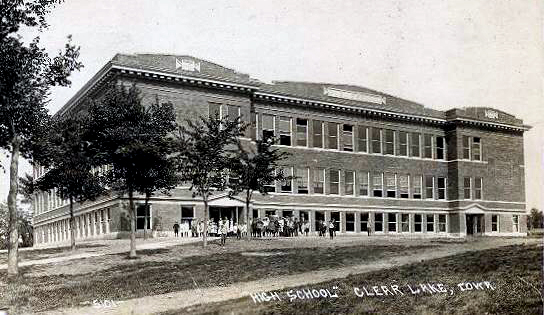
The 1900 school building burned down in March 1912, and a new 30-classroom school was built on the same site. The three-story building had steam heat and electric lights in all rooms
Doctors AB and NW Phillips opened the two-story Phillips Hospital behind Knutson Hardware on South Fourth Street. The first floor contained doctors’ offices and surgery, with a 10-bed ward on the second floor. Doctor Asa Phillips built their family home next door on South 4th Street.door. Closed in 1950 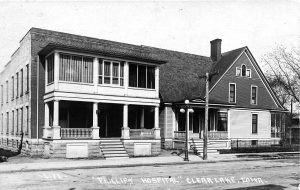
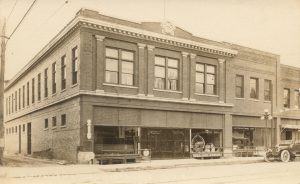
The IOOF building next to the Etzel Drug building on Main Street opened with the upper floor for IOOF meetings, the street level for two retail establishments and the lower level for service businesses.
Clear Lake had two new movie theaters. The Palm theater (later the Park) was across from City Park and the Electric Theater on north side of the 300 block of Main Street. Movies and live theater events were accompanied by a live band.
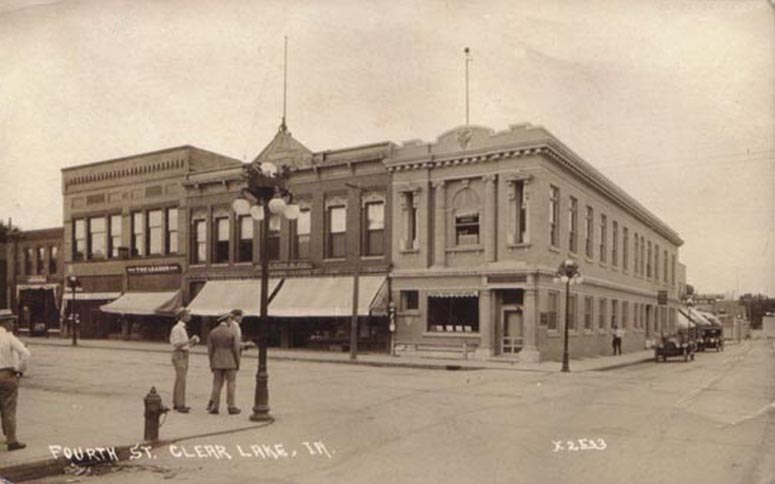
The Cerro Gordo County Bank replaced the 1885 building with a larger facility and rented the upper floor to doctors and dentists.
The Masonic Lodge built a new factilty next to Woodford-Wheeler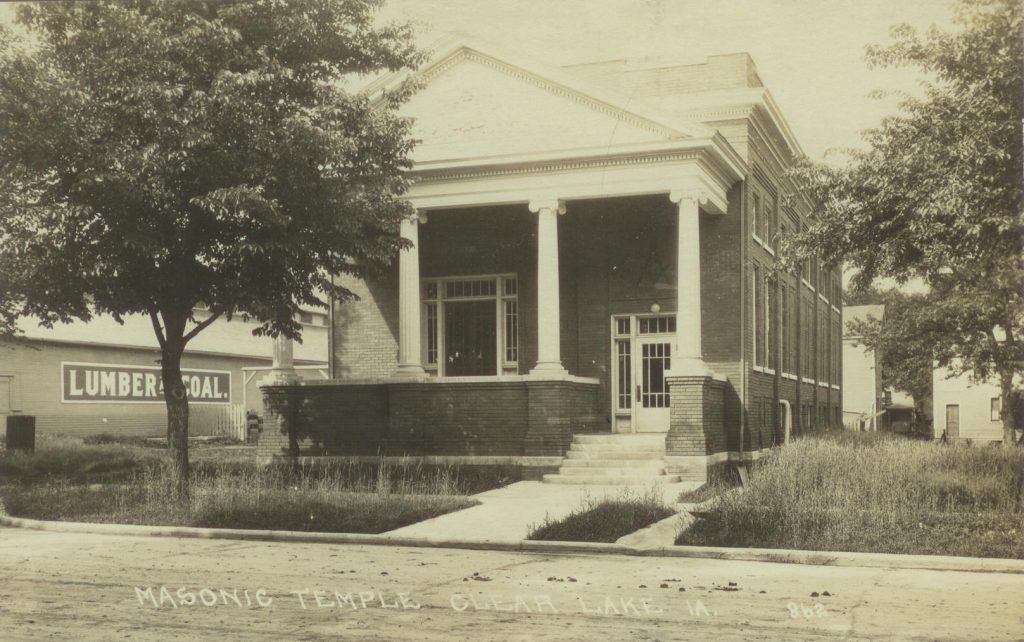
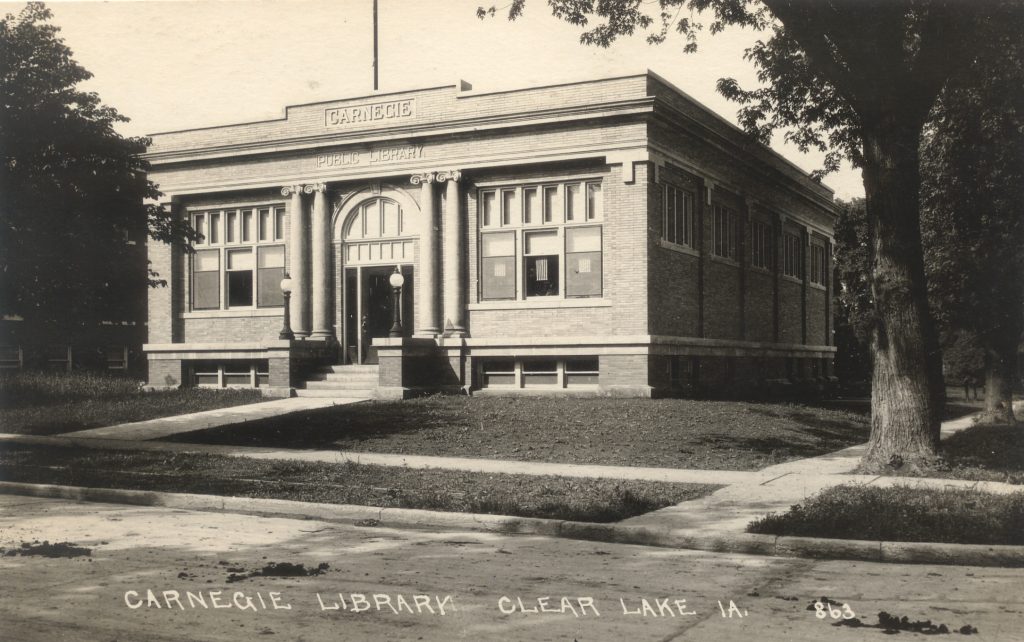
The new Carnegie Public Library opened using local funds and a significant grant from the Carnegie Foundation.
The Portland Cement Company of Mason City built a paved road between Mason City and Clear Lake to demonstrate the effectiveness of its cement for all-weather transportation. Designated as Iowa’s first all-weather Interurban Road.
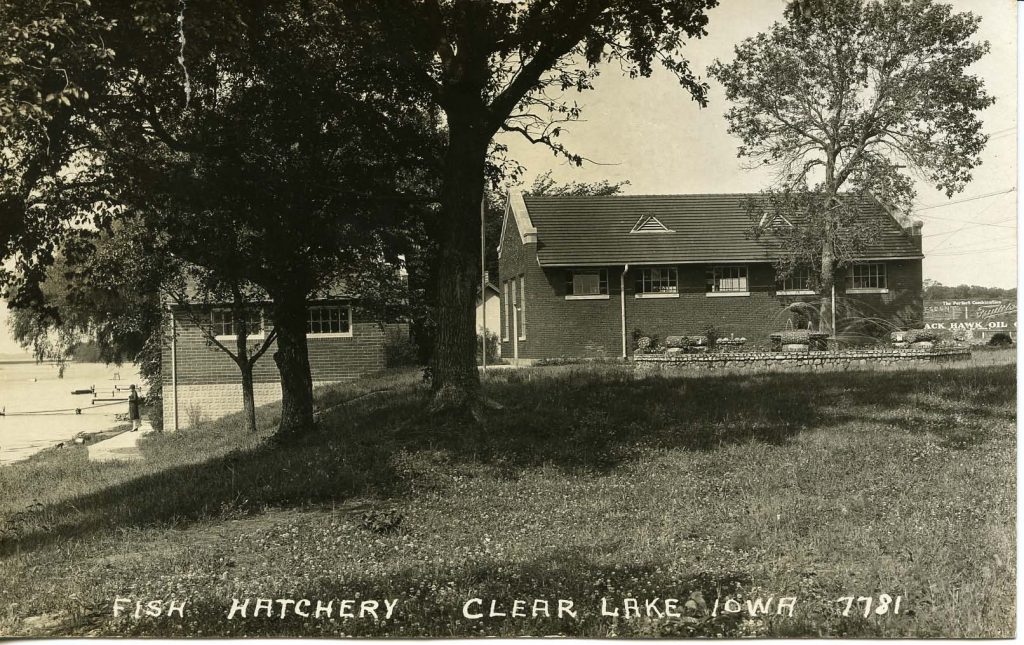
State fish hatchery opens.
Clear Lake State Park developed.
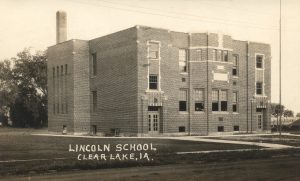
Lincoln School was built on corners of South East Street and South Street (S. 8th Street and S. 4th Ave). It was closed in 2008.
William Burkhardt purchased the Clear Lake Bakery from Rudolph Bey and created a bakery loved and remembered by visitors and residents.
Bill and Pearl Witke purchase the Willinow Bath House and begin expansions.