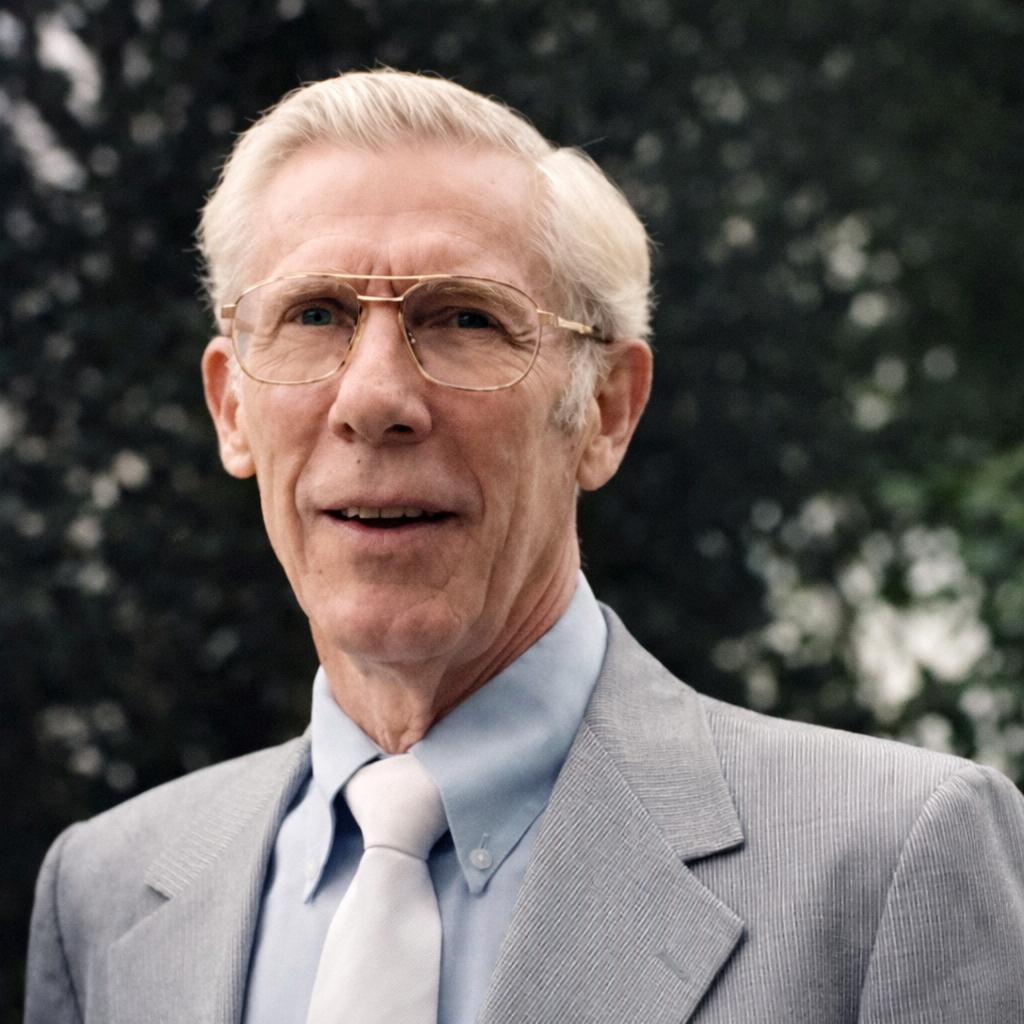
Interview with M. W. “Bud” Hughes
Every person listening to this program today is the sum total not only of his own experiences, but of his ancestor’s experiences and where and when those events happened. It’s always fun to be able to visit with someone who not only has interesting memories of his own life to recall but vivid memories of family members who have gone before. M.W. Bud Hughes of Clear Lake is such a person and thank you for coming to visit with us about these memories.
Your maternal great grandfather came to this area some 20 years after the very first white settlers had arrived in 1851. Tell us about him first.
His name was the Reverend Reuben Richardson Woods, and he came here from Wisconsin. At the time he came, he had been called to be minister of the First Congregational Church in Clear Lake and at that time they had a very small church located downtown. He also built 2 country churches, one known as the Lakeside Church and a lot of the people out southwest of Clear Lake remember that quite well.
In due time, Elder Wood’s daughter, Ada, married another early pioneer who had come to Clear Lake. This was Dr. W.R. Clack and he was also a particularly interesting person. Tell us about him.
Yes, he was interesting. He also came from Wisconsin and his father had been a Baptist minister. He was a good dentist for those days. In those days they didn’t go to dental college to be a dentist. They practiced with an existing dentist. He learned the craft quite well. He came to Clear Lake and had his office in Clear Lake and practiced there.
When did he come?
I don’t remember exactly. It was in the 1870s. I’m not very good at dates like that. And then shortly after that he moved over to Mason City and practiced in Mason City for many, many years until the 1920s.
Tell us a little about his dental office and his dental equipment… I’m sure it would have been very different.
Well the way people look at it today, it was quite primitive. They didn’t have the electric motors and the high powered drills to cool things down. The drill was operated by a foot treadle and he pumped on that like an old fashioned sewing machine. And I think they talked about painless dentistry but it certainly wasn’t painless in those days. He also was a master at the art of “foil gold fillings.” And he had quite a nationwide reputation on that. My aunt, Ida, was his assistant. She held the state dental technician #2. And they would get in sheets of gold foil, but it into Vi squares, and roll it by hand. They would drill out a cavity and they would tap the foil in there with a wooden skewer and mallet and drive that in.
Would it last long?
It would last forever. It was almost eternal. It was a slow painstaking process, of course. But he went all over the country conducting seminars teaching dentists how to put in gold foil fillings.
You mentioned that he had a fire in his office one time, and I thought that was quite a neat story.
Well, he had 2 fires actually but one was in Clear Lake. He was on Main Street on the second floor and then as now, they had a volunteer fire department and the fireman came and carefully carried out the chairs and sofas and hat racks and things like that and then the instrument case with all the delicate instruments in, they just threw that out the window. The second fire he endured was in Mason City in the Central Trust Bank Building. He was on the 5th floor in that building and sometime in the 1920s that burned and his office was burned up there.
You mentioned that patients would sometimes come quite a distance for Dr. Clack’s work and would stay at your grandparents’ home.
My grandmother was a long-suffering lady. Yes, Grandpa had patients coming from Forest City and Osage and the surrounding country and travel in those days was by horse and buggy. And they would come and it might be a day or 2 process while they were getting their teeth repaired and so unannounced to my Grandmother, these people would show up, and she would have to feed them and possibly house them for 2 or 3 days while Grandpa worked on them. He wasn’t too considerate of my Grandmother in that respect.
Your grandfather also had many interests besides his dental practice.
Yes, he was very, very interested in music and people have heard about the Chautauqua in Clear Lake and he was secretary of the Chautauqua and they brought in quite famous people to perform at the Campground there. Singers like Sheuman Hike and revivalist like Billy Sunday. In addition to his interest in music, he had a great love for horses. And I guess they kept 2 or 3 horses around the house there and the most famous was a horse called Gold Dust Prince. My grandfather would enter him in trotting races all over this part of the state. Now Grandpa never drove the horse or rode the sulky. He had a man hired to do that for him. But I guess the Gold Dust Prince was quite a horse in his day.
And that was a popular thing in those times, the trotting races, wasn’t it?
Yes, they had these tracks in county fair grounds and places like that and although they didn’t have pari-mutuel betting then, I’m sure a little money changed hands.
And how did they travel?
They would travel by rail if they went far away. They would load the horse in a car in a stall with a box around it and they would just haul it on the train. Of course, we had lots of trains in those days.
I was interested in the fact that you said you felt your growing-up days had been particularly enriched because of the cosmopolitan flavor of people you were exposed to, and that’s kind of unusual for those earlier times. Why don’t you share that with us?
At the time we didn’t think it was such a great deal. We lived right next door to my grandparent’s and I had an uncle who had been a teacher in China and people would come back from China, and check in at my grandparent’s house and bring trinkets back. Also, the professional people that came to visit there, and every time these people showed up, my Grandmother or one of my aunts would call and my sister and I would have to get dressed up, and go over and stand in line and visit with these people and it was really kind of a drag then but looking back now, I know that it was really a great experience. We talked to intellectual people, well educated people who had been around the world. It really opened up a lot of vistas for us.
You mentioned even some Chinese connections with high government officials.
My uncle went over there about the time of the First World War, and he was with the YMCA as a teacher, and he was a very curious type of person. He would go around and find out about things he became interested in like Chinese poetry. He learned the Chinese language, one of the dialects, and he got quite well acquainted with Son Youn Sin. Son Young Sin was founder of the Chinese Republic and later on it was Chang Kai Shek. They married sisters and so my Uncle Bob knew them quite well. We do have quite a few nice things that he brought back from China.
That is very interesting. You and your wife, Lois and your 4 sons have lived in the ancestral Clack home for quite a few years. It’s such an interesting home. How old is it?
Well, it was built sometime in the 1870s; the main portion is just a small portion of the house now. But the house grew kind of like Topsy. It seems that my grandmother had relatives up in Minnesota and she would go up and visit them occasionally and my grandfather thought that the greatest thing in the world to do when she was gone was to surprise her and put an addition on the house. And so, he would add a room here and add a room there and back in those days, I guess that the expensive thing was building materials and so they used a lot of used lumber. Although labor was fairly cheap but he never employed the best laborers and they were people who owed him bills and he would get them to come in and sort of cobble up things and I doubt if we have a comer of our house that is square and I don’t think the floor is level in any 2 rooms of the house. Before we put in carpet a number of years ago, you could put a basketball in one corner, and it would roll almost anywhere in the house. It was interesting. We did some remodeling a few years ago and a lot of the original house was built with square-cut nails and full size lumber.
You also have some interesting antique furniture. Is there anything in particular that comes to mind?
Well, I guess some people would call it antiques. To me it’s just old stuff I grew up with. About the only thing I think is interesting is that we still have the original bed in the house and the date on that is 1872 that is marked on the bed. It’s walnut and we have a lot of walnut furniture, and much was built by my grandfather. He had a hobby of working with wood. And as the walnut trees in the yard would fall down or blow over, he would have them sawed up into lumber and make furniture.
You grew up next door to this home, didn’t you?
Yes, I did. The home next door to where we lived is the home where I was born. That was originally my grandparents’ home and my grandmother’s father, the Reverend Wood lived in the house where I lived. So that’s always been our stamping grounds. We did live next door, and I have said earlier we would have to come over to there to meet everyone who was there.
You also mentioned a special love for going to fires that began as a kid. How come?
Oh, I don’t know. I guess I just liked to see things burn, I guess. In those days they didn’t have the alarm systems they have now. They’d ring the fire bell from downtown, and we could hear it from home, and we would chase after the fire engine and of course, there is a lot of interest about the Fire Department now with the new Fire Museum and all and the Aarons-Fox truck that they have. It’s an antique and I remember well when they got that. Before that they had a Model-T truck, and it was kind of light weight, and I know a couple of the big thrills of my life was going to fires and getting to ride back on the tailgate of the truck. And there were 2 rather husky guys, and they rode on the tailgate too and they thought the greatest fun was to jump up and down on the tailgate and the truck was so light that it would lift the front wheels off the ground. They would go back that way.
The school was right next door or right over the Fire Station; which was it?
No, the school known as Central School now is the only school we had and it became crowded. So, it was necessary to find other space for classrooms. The Clear Lake City Hall was located in the back part of where the Clear Lake Bank & Trust is now, so they put the 5th and 6th graders down there for a couple of years. So, I went to 5th & 6th grade down there so every time the fire station would ring the bell we would hear the fire engine leave.
And you would wonder where it was going?
Yes, we would!
Any other special memories of things you did in Clear Lake that might be different from what your own sons or kids today might do in growing up?
We didn’t have organized recreation like they have now. We didn’t have a lot of money to entertain ourselves but in the winter we had ice skating and sledding. The first pair of skis I owned was made of barrel staves. The ice skating, we skated on the lake a little bit but in those days you only had to go a little ways to find a pond frozen in someone’s back yard and skate there. Then of course in the winter the farmers came to town with bobsleds and they didn’t have snow removal equipment so the snow would pile up on the streets and on a Saturday we kids would go the edge of town and wait for a bobsled to come along and either hook our sleds to the bobsleds or ride on the runners of the bobsled. And of course, in the summer we had the lake and the swimming and all that.
You mentioned having the opportunity to meet a lot of the summer folk. How was that? Tell us about that.
When I was about a junior in high school, I got a job on Main Street at the United Cigar Store running a popcorn wagon. We would sell bags of popcorn and peanuts, and I would sit out there all day long 7 days a week. It was a good job in those days. I got $7 a week doing it. And in the summer people would come in to get their newspapers and buy cigars, and they would buy popcorn and I got quite well acquainted with some of these people. We had people who would come out from Chicago, Cedar Rapids and Des Moines and then we had a fulltime professional band in those days. They played every evening and then on weekends every afternoon and evening. I got acquainted with some of the bandsmen.
You graduated from High school during depression days. Did this give you any special problems?
There was a depression, but we didn’t really know about it, I guess. No there weren’t any special problems. The first year out of school I drove truck for a year. Then I went to Junior College for 2 years. Mason City Junior College, was it the oldest in the state? I’m not sure but it was one of the oldest. I attended it for 2 years.
And how did you get back and forth?
We had a streetcar, the Inter-urban Electric Railroad. It ran back and forth from Mason City to Clear Lake. At one time it ran every hour on the hour. And I would come over on the streetcar and incidentally that’s the way my grandfather and aunt commuted for many many years on the streetcar. In those days the end of streetcar in the summer months was up by the Surf Ballroom. It would go clear to Mason City, a block north of Central Park, and go around the block there and return to Clear Lake.
What did you do when you got out of college?
I had a few odd jobs. I worked in a filling station and then my grandfather and father were with a coal company, so I went into Chicago and worked for a year in the office, spent some times down in the mines, and came out on the road and sold coal. And you did that for many years again.
Yes, I sold coal for a number of years and then for 10 years, my brother and I operated a service station located near where the Surf Ballroom is now and then I went back on the road selling coal.
You said that was a good job and you got to see lots of the country. Right?
Well, I have been in every county in the state and most of the towns in the state so yes, I saw a lot of the country.
MUSIC INTERLUDE
Just before the break, we were visiting about the years when you owned and operated a service station. During those years you became involved in organizations and civic events. One that particularly intrigued me was your involvement as chairman of events for the observance of the Clear Lake centennial in 1951. Want to tell us about that?
Yes, that was kind of interesting. We cheated a bit on our centennial in 1951. They knew, I believe, that a lot of towns would be having centennials in the next few years; so instead of waiting until the 100th anniversary of the incorporation of Clear Lake; they thought it would be a good idea to have the centennial based on the time that the first white people came to Clear Lake.
So, a couple of fellows came down to the station to see me one day and we went across the street for a cup of coffee and they thought that because our family had been around a long time that it would be nice if I would be chairman of the centennial. I think the real reason they came was that they knew I was a sucker and would say “yes”. But I said yes that I would. I must say that I had been quite disturbed because Clear Lake had gained a reputation over the years of gouging the summer people so when they came they would raise the price of coffee in some of the cafes from a nickel to a dime and that whenever anyone came into Clear Lake they had to pay through the nose for entertainment. And that bothered me. So, I told them I would be happy to be chairman of the centennial on one condition and that was that all the entertainment and everything connected to it would be free to people that came in. And they didn’t like that very well as they thought it was a chance to turn an easy buck. But they finally said yes that they would go along with it.
So, we got together and so as far as I am concerned, and of course I am prejudiced, I think the centennial was one of the greatest things that ever happened to Clear Lake. We had a bunch of these little organizations. We had a big pageant that was written by local people. It was performed by local people, we had no professional help, and the little clubs would have their little skit or tableau or little float and get that together. The pageant was held at Lions Field. And at least for once, the whole town worked together. There was no jealousy, no bitterness and it was a great experience.
You did import a few people.
I wouldn’t say they were professionals. They weren’t paid. We thought we should have Indians because Indians play a part in Clear Lake’s history. So, the secretary of the chamber and I went down to Tama and met with the chief and the tribal council to see if the Indians would come up here. And incidentally I formed a very lasting friendship with Chief George Youngbear. Well, the Indians signed a contract and they came up- I don’t remember how many – probably 30 adult Indians and 15 young Indians. We had to sign a contract to provide transportation, we had to provide 2 or 3 bales of straw for them to sleep on and we had to provide some kind of meat. And we talked to them and they thought fish would be good. So, we went to the Conservation Commission and asked them if they would get some fish for us. So, the day the Indians arrived, they trucked in a load of carp from Okoboji.
I might say that we had a very rainy spring that year and we got quite desperate as we thought we were going to get rained out for the centennial and so we talked to the Indians to see if they could something to provide good weather. They said, yes, they would put a good weather dance which they did. And it turned terribly hot and those Indians squaws were cleaning that carp down by the lake front and we had good weather for the few days of the centennial and inside of an hour after the Indians left town, – they were just loaded in cattle trucks and hauled out – it started to rain again.
They made believers of them, didn’t they?
Your wife, Lois, directed the pageant for that very special event and though we came to the area sometime after 1951, I have always heard many complimentary comments about what a great pageant it was. Tell us a little about it.
She helped direct the pageant. As I said the pageant was written locally. We had quite a script for it. Different little segments, some tableaus, some floats, and we held it at the football field and there was quite a bit of discussion about that because some of them didn’t want horses on the sod at the football field. We held the pageant for I think 2 nights and we had 4 or 5 thousand people who came to see that pageant. And it was free and the people enjoyed it and we got a lot of compliments about it. As I said the whole town worked together on the centennial.
That’s great! One thing I’ve always heard and read about Bud Hughes has been your involvement with Boy Scouts through the years. When did that start for you?
I became a Boy Scout in 1926. I’ve kept up my membership ever since. It was interesting how I got into scouting. I had read scouting books and read Boys Life magazine and there wasn’t a scout troop in Clear Lake at that time, and I had the handbook and learned all the tests and I hounded my mother that I wanted to be a Boy Scout so she told me if there wasn’t a troop in Clear Lake by the time I got to be 12, that was the age you had to be to join scouting then, she would pay car fare so I could go over to Mason City and join a troop in Mason City. So, when it came time for my birthday in April and the word was around that there was going to be a scout troop in Clear Lake, so I waited and they started the troop in June.
The superintendent of the schools was to be scoutmaster. And nobody asked me to be a member, but I went up the night to where they were having their meeting, and they were all older fellows who were going to be in scouts and they ran me out. That’s about the only time in my life that I cried in public, but I came home and my dad took me back up to the school and the superintendent said, “Sure he can be a Boy Scout”. And I was kind of a sissy, I was raised with a bunch of sisters, and I felt that I had something to prove and so in order to make a place for myself; I worked real hard on the tests and advanced quite rapidly.
And you did become an Eagle Scout.
Yes, I finally became an Eagle Scout.
I know you are very modest about it, but I think our listeners would be interested to know you have received many awards including the Silver Beaver Award which certainly speaks well of your contribution to the Scouting program. You’re still active in scouts today and in what capacity?
This is the most rewarding part of being in scouting, I think. For 5 or 6 years now, I have been scoutmaster of a troop at Handicap Village. We have mentally and physically handicapped fellows in the troop. There are about 25 of them in the troop and it’s been a good program for them. Some go to Scout Camp every summer at Marble Rock and it’s a far cry from the traditional scouting, but it is very interesting and very rewarding.
That’s great of you to do it! You retired from your position with General Dynamics several years ago, having returned to your position with them after you sold your North Shore Station in 1954. Your wife, Lois, who taught for many years in Ventura, is also retired and I think it’s great you have chosen to stay in not only the same town where you grew up but, in the home where your grandparents once lived. Any special thoughts about what you’re enjoying doing now.
Yes, I enjoy getting up each morning and being alive. But I enjoy living in Clear Lake. I think it’s the greatest place. Our 4 sons were raised in Clear Lake. They all did well. They have all been successful. They got a good background in Clear Lake. I question if they would have done as well in a large city.
I think we might just mention here a little bit and tell us about those 4 sons.
Well one of them went to college in Idaho on a Naval Reserve scholarship; 2 of them went to West Point and graduated from the military academy and the 4th one graduated from Carleton College in Northfield. Three of them have their master’s degrees. One of them is still in the military service, a Lt. Colonel in Germany, one lives in Rhode Island where he is a CFO for a donut company, another one is in hazardous waste and safety work in California and another one sells surgical supplies also in California.
You’re active in Lions and the church where your great-grandfather once preached. I know you’ve been involved a little bit in a historical film that’s a new film in Clear Lake. Is there anything else that you might like to add to finish our program?
I think I would like to put in a plug for Clear Lake. While we were different from a lot of small towns it’s still a good town to raise a family in people care in Clear Lake. They are interested in you and it’s just one big family. Growing up as a kid I had dozens of uncles and aunts who were no relation at all, but they were friends you called Uncle Ira and Aunt Bertha, and we still have a little bit of that in Clear Lake today.
Thank you, Bud for sharing those thoughts with us.