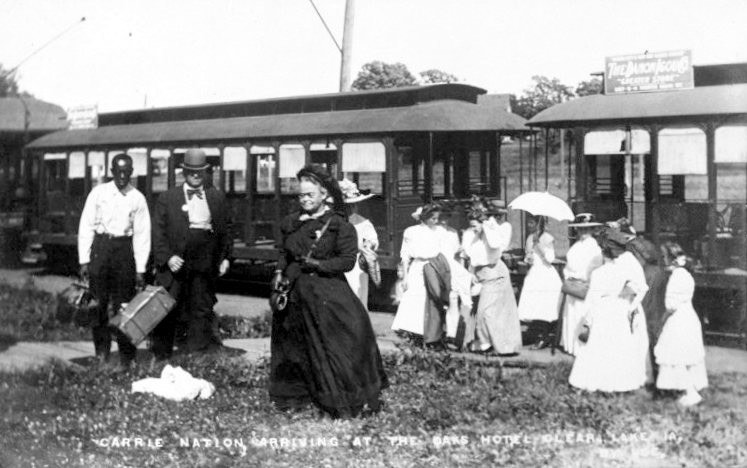
This week for Throwback Thursday is an excellent opportunity to explore the roles of African Americans in Clear Lake during our community in the 19th century in honor of Black History Month. Several African Americans lived and worked in Clear Lake in the late 19th and early 20th centuries. Phil Mench, a local Clear Lake photographer, took photos of African American men working about town. Photos exist of an African American man as the chef at the Island Home Hotel, and an African American man acting as a carriage driver at the Lake Shore Hotel. An African American gentleman is smartly dressed in the photo shown as he carries the bags of Carrie Nation when she arrived at the Oaks Hotel to speak at the Clear Lake Chautauqua. The Clear Lake Chautauqua was well known for bringing choirs and bands that were nationally known in the late 19th and early 20th centuries to Clear Lake. Booker T. Washington and Amanda Berry Smith were well-known speakers at the Clear Lake Chautauqua. Let’s explore the life of a well-known African American woman in our community.
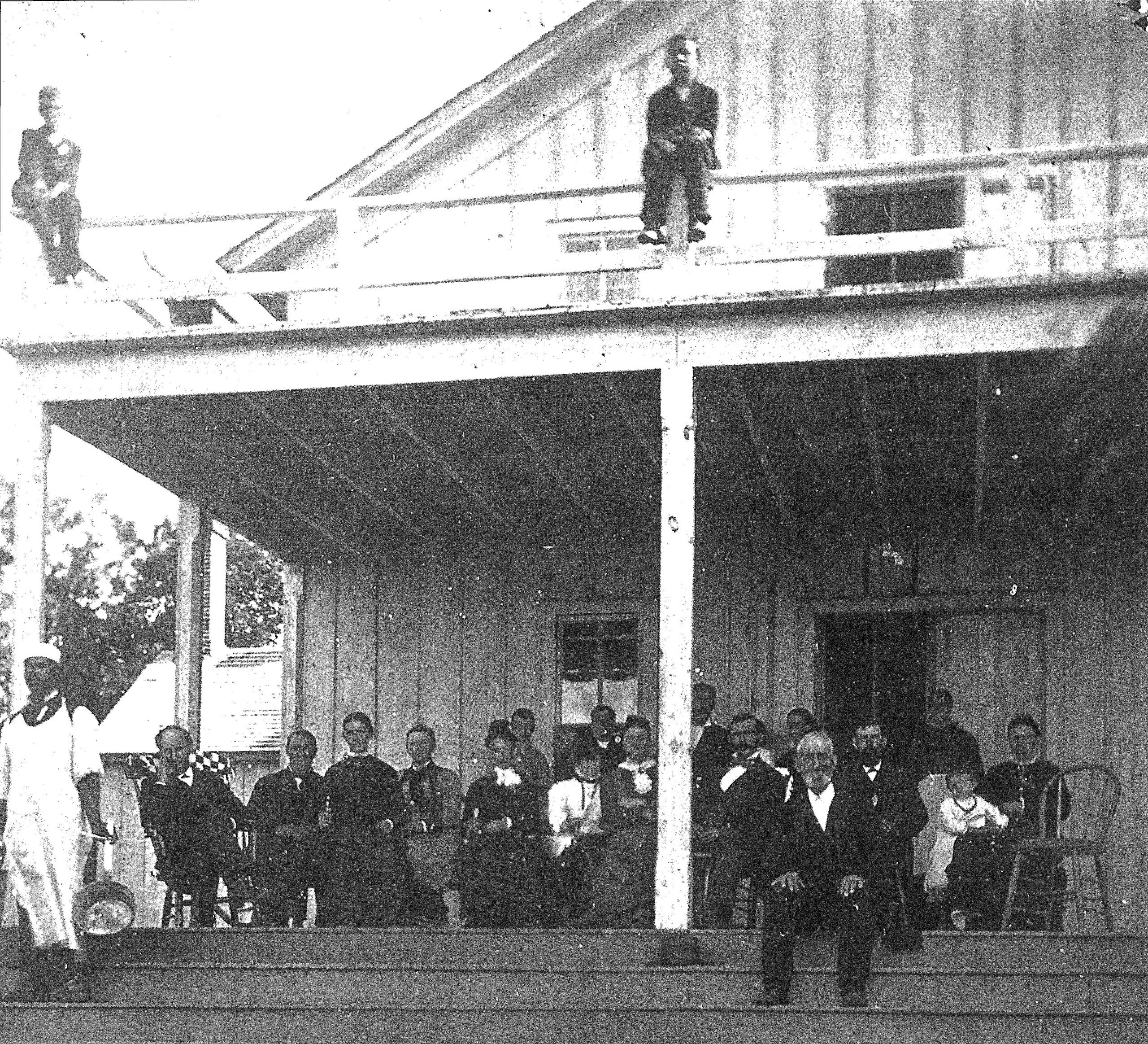
The phrase “Old Ellen” is most likely unfamiliar to Clear Lake residents today, but 100 years ago, everyone in town knew exactly who “Old Ellen” was. From 1869-1925 Ellen Wilhite (photo above) could be seen on the streets of Clear Lake selling toiletries including soaps and perfumes. Born into slavery in the state of Kentucky in about 1852, Ellen came to Clear Lake after the Civil War with the William Henry and Adaline (Babbitt) Pence family. She was listed as member of the Pence household in the 1870 Federal Census and had a one-month-old Mulatto child as well. She shared that as a slave in Kentucky and Missouri, she remembered being sold twice. By the 1885 Iowa Census, Ellen was on her own, making her home with various families in town and making a living by working for the families she lived with, and selling toiletries, flowers and jellies. Ellen, who generally had ribbons in her hair and wore a black skirt and shawl, could be found in city park as an avid supporter of the community band concerts. She was often surrounded by her friends during the events or sometimes would be seen sitting alone, nodding her head in time to the music. She was an active member of the Clear Lake Methodist Church and participated in many activities of the church including visiting the sick. Her daughter Libbie also lived in Clear Lake, making her home with the D.H. Palmeter family from the time she had been a little girl.
Ellen became ill in the mid 1920s and passed away at Park Hospital in Mason City, Iowa on September 11, 1925. She was laid to rest in a lot in the Clear Lake Cemetery provided by the Pattee family. Mary Pattee of Clear Lake was the wife of the first pastor of the Clear Lake Methodist Church, the Reverend Elias Pattee. Ellen’s initially unmarked grave was next to Mary Pattee’s grave and remained unmarked until 2015 when an anonymous donor provided funds for a marker to be placed. Attached is a photo of Ellen from the late 19th century.